
How to Find Your People Without Losing Yourself.
- May 15, 2024
- 9 min read
There is a kind of loneliness that does not always look like being alone.
Sometimes it looks like being surrounded by people and still wondering where you fit. It looks like wanting deeper connection but feeling hesitant to reach for it. It looks like craving community, tribe, village, friendship, support, and belonging, while another part of you whispers, “Be careful. Remember what happened last time.”

This post may contain affiliate links, which means I'll receive a commission if you purchase through my link, at no extra cost to you.
That whisper may sound like wisdom.
But sometimes, it is fear wearing the clothes of discernment.
😱Fear says, “Do not let people get too close.” Insecurity says, “They probably will not understand you anyway.”
😔Past disappointment says, “It is safer to stay guarded.”
And slowly, without realizing it, you may begin building walls around the very parts of you that were created for connection.
But you do not have to choose between isolation and overexposure. You do not have to open your life to everyone in order to stop hiding from everyone. You can build connection with discernment, self-trust, and God.
You can find your people without losing yourself.
Why Finding Your People Can Feel So Hard
Connection can feel simple when people talk about it from the outside.
“Just put yourself out there.”
“Join a group.”
“Meet new people.”
“Find your tribe.”
But when you have been misunderstood, rejected, overlooked, used, betrayed, or made to feel like your presence was too much or not enough, connection does not always feel simple. It can feel risky.
You may want support and still feel afraid of needing it.
You may desire community and still question whether safe community exists.
You may want to be known and still fear that if people really see you, they will decide not to stay.
This is where many people get stuck. Not because they do not want connection, but because fear and insecurity have become loud at the exact place where trust is required.
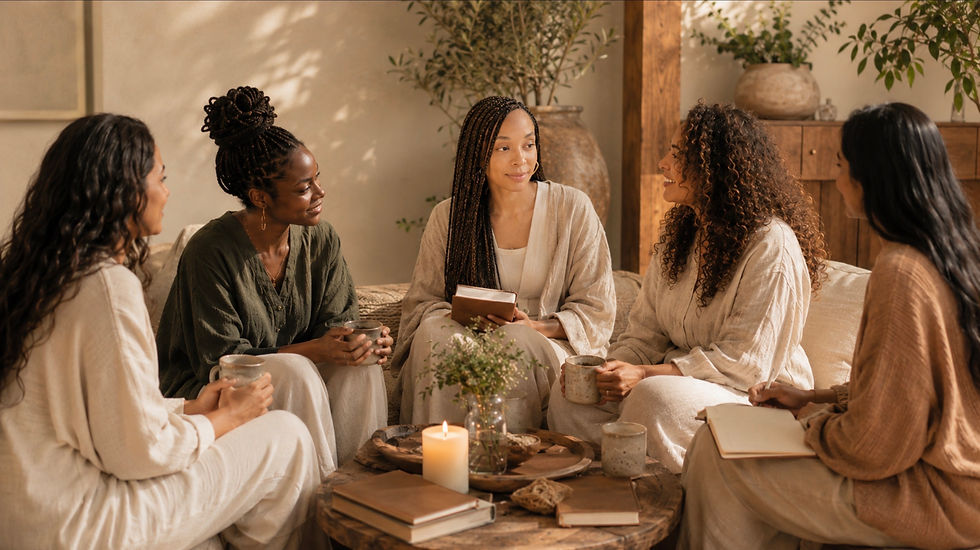
Fear tries to protect you from being hurt again. Insecurity tries to convince you that what happened before is proof of who you are. Together, they can make isolation feel responsible, even when your inner world is asking for something softer, safer, and more life-giving.
The truth is, being guarded may have helped you survive a season. But survival patterns are not always meant to become permanent homes.
At some point, the wall that protected you can also begin to limit you.
You Were Not Created to Become Alone
There are good people in the world.
Not perfect people. Not people who will always know exactly what to say. Not people who can carry what only God can carry.
But good people.
Aligned people. Safe people. Wise people. Honest people. People who can remind you of truth when fear gets loud. People who can sit with you without making you perform. People who can celebrate your growth without competing with it. People who can challenge you without shaming you. People who can witness your becoming without trying to control it.
Community is not about collecting people.
It is about recognizing alignment.
It is about learning who brings peace, truth, honesty, accountability, steadiness, and care into your life. It is about noticing who helps you stay connected to God and yourself, not who pressures you to abandon yourself to belong.

Support is not proof that you are incomplete. Support does not replace your strength, your wisdom, your prayer life, your discernment, or your ability to move through life.
Support helps create conditions where your becoming can breathe.
Even from a public health perspective, connection matters. The U.S. Surgeon General has named social connection as an important part of individual and community well-being, and the CDC notes that meaningful social connection can support health, resilience, and well-being. (HHS.gov)
FYIG says it this way: inner work is personal, but it was never meant to make you disappear into yourself.
Sometimes God strengthens you in quiet places. Sometimes God steadies you through reflection, prayer, and solitude. And sometimes God sends people, spaces, and rhythms that help you remember you do not have to carry every part of life alone.
Discernment Is Not The Same As Disconnection
One of the most important things to learn when you are rebuilding trust is this:
Discernment and disconnection are not the same thing.
Discernment says, “I can move slowly.” Fear says, “Do not move at all.”
Discernment says, “I can pay attention to fruit, patterns, peace, and consistency.” Insecurity says, “Assume they will reject you before they get the chance.”
Discernment says, “I do not have to give everyone full access to me.” A wall says, “No one gets access at all.”
Discernment honors what you have lived through without letting it define every relationship ahead of you.
That distinction matters.

Because some people have been taught that being wise means being closed. Some people have been praised for being low-maintenance, private, strong, independent, and unbothered, when underneath it all, they were lonely, tired, and unsure how to ask for support without feeling exposed.
But you can protect your peace without closing your heart.
You can have boundaries without becoming unreachable.
You can be careful without becoming cynical.
You can let people earn trust without making everyone pay for wounds they did not create.
That is not weakness. That is mature inner work.
What Healthy Support Actually Looks Like
Healthy support does not require you to become a different version of yourself.
It does not rush you.
It does not shame you.
It does not demand instant vulnerability.
It does not make you feel small for needing time.
It does not confuse control with care.
Healthy support gives you room to be honest and still respected.
It helps you feel more connected to yourself, not less.
That matters because the wrong spaces can make you perform belonging. You may find yourself laughing when you are uncomfortable, saying yes when you mean no, shrinking so people do not feel challenged, oversharing so people will stay, or hiding parts of yourself so you can be accepted.
That is not community. That is self-abandonment with an audience.
The right people do not require you to leave yourself behind to be loved, included, supported, or understood.
They may not understand everything immediately, but they will handle your humanity with care. They will make room for truth. They will respect your no. They will not punish you for having needs, boundaries, convictions, or growth.
And just as importantly, healthy community helps you practice being a healthy person in community too.
Because finding your people is not only about who they are. It is also about who you are becoming.
Can you communicate honestly instead of disappearing?
Can you receive care without apologizing for needing it?
Can you let people be imperfect without making one mistake the whole story?
Can you stay connected to yourself while learning how to connect with others?
These are not small questions. These are inner work questions.
When Fear Tries to Call Itself Wisdom
Fear is convincing because it often has evidence.
It remembers the friend who changed.
The group that excluded you.
The person who misunderstood your heart.
The season where you showed up for everyone and felt alone when you needed support.
So when fear tells you to stop trying, it may sound logical.
But fear cannot lead the room and call it wisdom.
Wisdom may say, “Pay attention.”
Wisdom may say, “Move slowly.”
Wisdom may say, “Do not ignore what God is showing you.”
Wisdom may say, “This space is not aligned.”
But wisdom will not require you to bury your desire for healthy connection.
Wisdom does not make you numb. It makes you clear.
Fear builds walls and calls them protection. Wisdom builds doors, windows, boundaries, and bridges. Wisdom lets you decide who has access, how much access they have, and whether their presence helps support the life God is forming in you.
That is the difference.

You are not wrong for wanting people. You are not weak for wanting to be seen. You are not behind because you are still learning what safe connection feels like.
You are becoming.
And part of becoming may be letting God heal the part of you that started believing isolation was the only way to stay safe.
How to Begin Building Community Without Losing Yourself
You do not have to change your whole life overnight.
You do not have to become the most social version of yourself. You do not have to tell everyone your story. You do not have to force closeness with people who have not shown capacity for your truth.
Start smaller.
Start with one honest sentence.
Ask yourself:
Where have I been calling isolation peace?
That question may reveal something important.
Maybe you have been avoiding connection because you are tired. Maybe you are in a necessary season of solitude. Maybe God has been pruning relationships that no longer fit. Maybe you are not lonely for more people; maybe you are longing for safer people.
Or maybe you are ready for a bridge.
Not a bridge into chaos. Not a bridge into overextending. Not a bridge into performing.
A bridge into aligned connection.
Here are a few small ways to begin:
1. Name what kind of support your becoming needs. Do you need encouragement, accountability, prayer, wisdom, shared interests, emotional honesty, creative community, professional support, spiritual grounding, or simply people who feel peaceful to be around?
2. Notice who helps you feel more like yourself. Pay attention to the people and spaces where you do not feel pressured to shrink, prove, perform, or explain your worth.
3. Take one low-pressure step toward connection. Send a message. Accept an invitation. Join a group. Return to a space that felt safe. Start a conversation. Ask someone you trust to pray with you. Let the step be honest, not dramatic.
4. Practice discernment without suspicion. You can pay attention without assuming the worst. Let people show you who they are over time.
5. Stay connected to God and yourself while connecting with others. Community should not pull you away from your center. The right connections help you return to what is true.
Research on loneliness and social connection often points to the value of improving social skills, strengthening support, increasing meaningful contact, and addressing the thoughts that keep people disconnected. (PMC) FYIG would add this: the goal is not just more contact. The goal is connection that helps you remain present, honest, grounded, and whole.
A Reflection for the One Who Wants Their People
Before you ask, “Where are my people?” ask yourself:
Where has fear taught me to stop looking?
Not because fear is evil. Not because your hesitation is wrong. But because fear may be working from old information.
There may be people you have not met yet. There may be rooms you have not entered yet. There may be spaces where your wisdom, softness, humor, honesty, creativity, faith, and presence make sense.
There may be people who are also praying for aligned connection, wondering where their people are, hoping they do not have to keep becoming alone.
But you may have to let God show you the difference between a wall and a boundary.
A boundary says, “I know how to care for myself here.”
A wall says, “No one can meet me here.”
A boundary protects your becoming.
A wall can imprison it.
And sometimes, the next step is not trusting everyone.
Sometimes the next step is admitting:
“I want community, but I am scared.”
That one honest sentence matters.
What you name, you can begin to care for.
You Can Find Your People Without Abandoning Yourself
The right community will not require you to become less of who God created you to be.
It will not ask you to silence your inner life. It will not make you perform okayness. It will not shame your process, rush your healing, or make you feel like your becoming is inconvenient.
The right support will help you practice steadiness.
It will remind you that you can be capable and still need care. You can be strong and still need softness. You can be growing and still need guidance. You can enjoy solitude and still desire belonging.
You do not have to wait until loneliness becomes unbearable to seek connection.
You do not have to wait until you break down to let yourself be supported.
You do not have to build your whole life behind a wall just because someone mishandled access to you before.
There are still bridges worth building.
There are still safe people.
There are still spaces where your presence will not feel like too much.
There are still God-aligned connections that can support who you are becoming without asking you to leave yourself behind.
Start with one honest sentence.
Name the kind of support your inner life needs in this season. Ask God to help you recognize the people, places, and rhythms that bring peace, truth, care, and alignment. Then take one small step toward a bridge that does not require you to abandon yourself.
You are not behind.
You are not broken.
You are becoming.
And you do not have to become alone.
Continue the Reflection
If you need language for the season you are in, begin with You Can Do This by Dr. Amirah B. Abdullah. It is a foundational reflection tool for naming what you feel, listening inward, and learning how to move through life without leaving yourself behind.
And when you are ready for a steadier rhythm of reflection, support, and becoming, The Inner G Collective is an invitation to keep practicing inner work in community.
Disclaimer: This article is for informational purposes only and is not a substitute for professional medical advice, diagnosis, or treatment. Always seek the advice of your physician or other qualified health provider with any questions you may have regarding a medical condition.
🌀 Stay close.
Subscribe to A Gym for the Mind for insights, reflection prompts, and resources that meet you right where you are.

Amirah B. Abdullah, DrPH
Founder of For Your Inner G | Writer + Wellness Educator
Dr. Amirah is a mindset and emotional wellness guide helping ambitious souls shift perspective, deepen self-awareness, and heal with intention. Through her blog, A Gym for the Mind, she shares poetic reflections, grounded strategies, and soulful truths to support your personal growth journey.
Meet Dr. Amirah | Explore Tools for Growth
©For Your Inner G - All Rights Reserved


